

Site targets broad, high-volume keywords
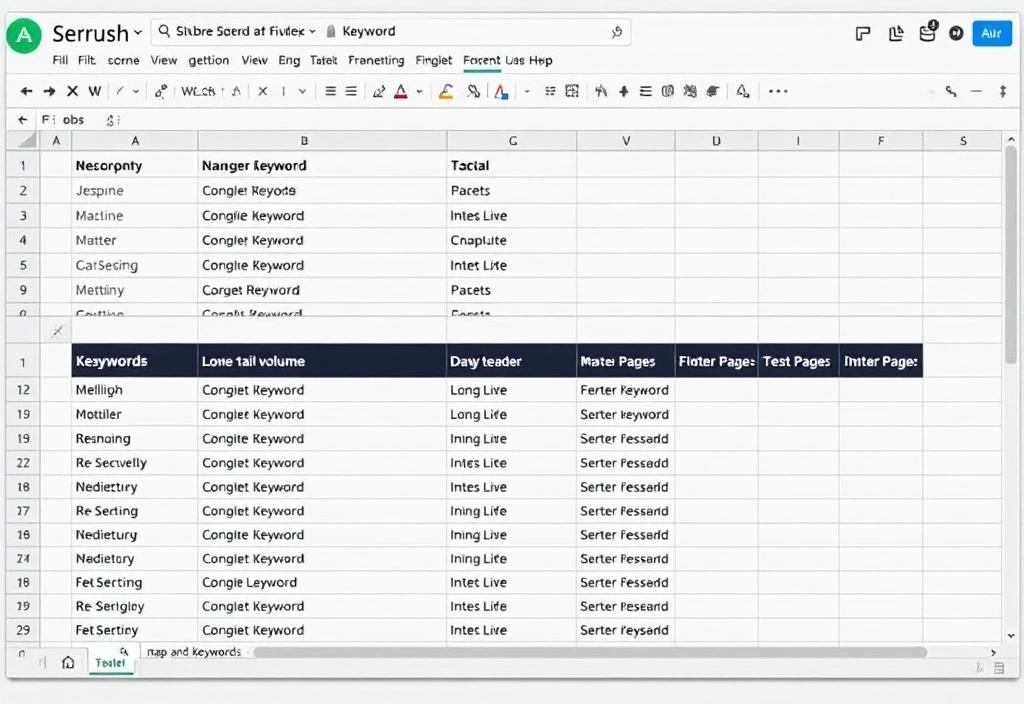
A new site chasing terms like "shoes" or "insurance" is competing against pages that have accumulated years of links, content depth, and user signals that Google's ranking systems weigh heavily. That competition is why the page gets built, gets indexed, and still gets almost no impressions — the Search Essentials guidance describes ranking as a function of relevance and a page's overall quality signals relative to everything else answering the same query, not just whether a keyword appears on the page.
The practical symptom shows up in Search Console-type reporting before it shows up anywhere else: the page is indexed, it targets a term with a large reported search volume, and it still gets close to zero impressions for weeks. That's not a crawling problem or an indexing problem. It's a ranking-difficulty problem — the query is dominated by pages the new site cannot yet outrank on any of the signals Google evaluates.
The fix is not a better version of the same broad page. It's a shift to long-tail keywords: longer, more specific phrases that carry lower individual search volume but far less competition. A site with no existing authority should build its first pages against a filtered keyword list of these narrower terms rather than the head terms a generator tool surfaces first, because volume alone doesn't tell you whether ranking is achievable — it only tells you how many people search.
Pick a seed keyword describing the product or subject
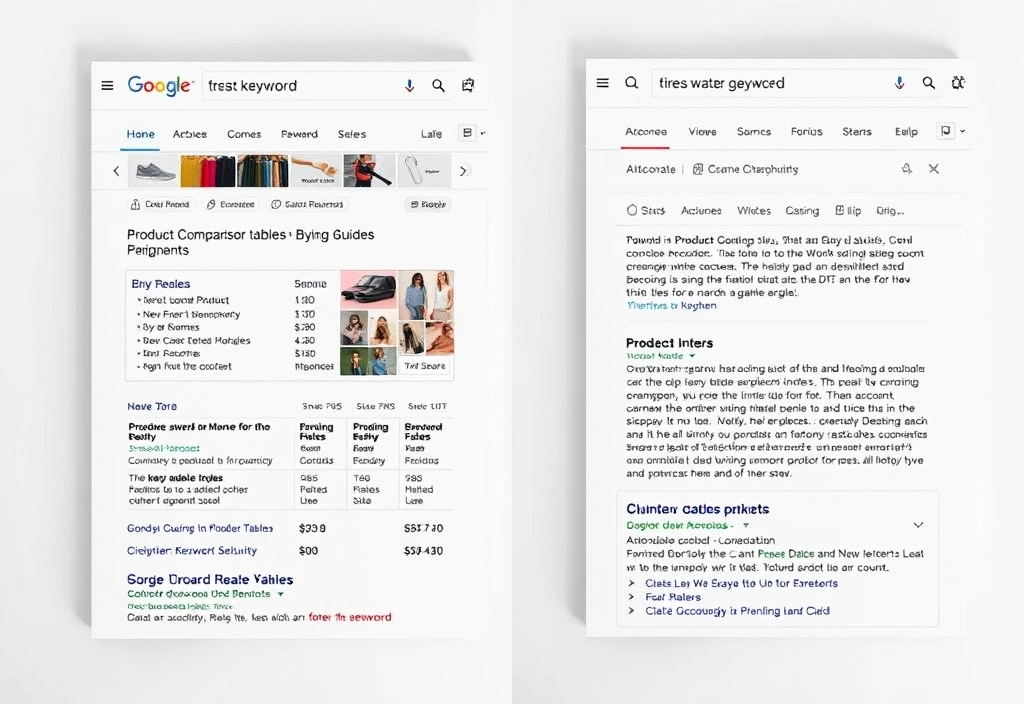
The process starts with one broad seed term that names the product, service, or subject the site covers, then works outward from there. This is the sequence that tool-focused guides tend to assume without stating:
- Pick a seed keyword. Something plain and direct — the product category or the service itself, not a phrase already tuned for search volume.
- Expand it with a research tool. Google's Keyword Planner generates related terms from a seed, as do free tools such as SE Ranking's keyword suggestion tool, which pull suggestions from autocomplete and other sources.
- Read the volume and competition data for each idea. Keyword Planner reports these as ranges rather than exact numbers, and the ranges only get more precise with active ad spend running through the account.
- Check the SERP for each keyword that survives. Search the term itself and look at what's actually ranking — articles, product pages, videos, local packs — before assuming your planned page format matches what's being rewarded.
- Group the surviving keywords into a keyword list mapped to pages. Terms that share the same intent and would produce the same page get merged into one target; terms that need a different answer get their own page.
That last step — going from a spreadsheet of keyword ideas to a decision about which keywords share a page and which need separate ones — is where most of the actual planning work happens, and it's the step generic keyword-list advice tends to skip.
Page ranks but attracts no conversions
A page can rank on page one for its target keyword and still produce almost no conversions, and no organic clicks worth mentioning. When that happens, check what content type actually occupies that keyword's results before touching the page itself.
If a keyword returns product listings and comparison content but the page built for it is a long informational article, the mismatch is between intent and format, not between the page and the ranking algorithm. The Google Search Essentials documentation frames ranking as matching content to what users are looking for — and a page can satisfy the letter of a keyword while missing the reason people typed it. Someone searching "best running shoes for flat feet" wants a comparison or a buying guide; a page explaining the biomechanics of flat feet answers a different question with the same words.
The fix here is not more content on the existing page. It's re-targeting the keyword with the format its searchers are actually looking for: a comparison table instead of an essay, a product page instead of a blog post, a calculator instead of a definition. Ranking and converting are separate problems, and confusing them leads to rewriting pages that were never wrong about relevance — only wrong about shape.
Keyword list
A keyword list is the compiled and filtered output of keyword research — the working document a site actually plans content against, not the raw export a tool produces. Raw exports from generator tools like Keyword Magic Tool or Keyword Planner routinely return hundreds or thousands of variants for one seed term, most of them duplicates, near-duplicates, or terms with no realistic path to ranking.
Filtering that raw output into a usable list means removing near-duplicate phrasings that would compete against each other for the same page, discarding terms whose SERPs are dominated by a content type the site doesn't produce, and assigning each surviving keyword to exactly one page rather than spreading it across several. A keyword list that skips this filtering step is really just a keyword export, and building pages straight from it tends to produce overlapping pages competing with each other rather than a coherent set targeting distinct intents.
Keyword research
Keyword research is the process of finding and evaluating the search terms an audience actually uses, so that content can be built around demand that exists rather than around guesses. It combines two activities that get conflated too often: generating candidate terms from a seed word, and evaluating each one against volume, difficulty, and intent before it earns a place on the keyword list.
Generation is what most free tools do well. Evaluation — deciding which of the generated terms a specific site can realistically rank for, and what content format each one calls for — is the part that requires checking SERPs directly rather than trusting a metric. The University of Georgia's guide to keyword research frames this as matching what an audience is actually searching for against what the site can credibly produce, rather than simply chasing the terms with the biggest reported numbers.
Long-tail keyword
A long-tail keyword is a longer, more specific search phrase that individually carries lower search volume than a broad head term but collectively accounts for a large share of total search activity. "Running shoes" is a head term; "running shoes for overpronation size 11" is long-tail — narrower intent, smaller individual audience, and a far smaller field of pages competing to answer it.
The trade-off is straightforward: head terms bring larger theoretical audiences and larger ranking difficulty; long-tail terms bring smaller audiences per term but a realistic path to ranking for sites without an established backlink profile or content history. Because long-tail searchers tend to know more specifically what they want, the University of Georgia's guide to keyword research notes that these more specific phrases often convert at a higher rate even though each one is searched less often — a smaller number of more qualified visitors rather than a larger number of casual ones.
Search volume
Search volume is the estimated number of monthly searches a keyword receives, and it's the single number every keyword tool leads with — Keyword Planner, Keyword Magic Tool, and SE Ranking's suggestion tool all report some version of it. It is an estimate, not a count: different tools pull from different data sources and rarely agree closely on the same term.
Two distinctions matter here that volume alone doesn't capture. First, volume measures how often a term is searched, not how many of those searches a given page would actually receive if it ranked — a page ranking third for a high-volume keyword gets a fraction of that number in clicks, not the whole figure. Second, Keyword Planner reports volume as a range rather than a precise figure for accounts without active ad spend, so the free version of the tool trades precision for access. Volume should be read as one input to a targeting decision, not as a forecast of traffic.
Ranking difficulty
Ranking difficulty is a measure of how hard it is to rank for a keyword given who already occupies that keyword's results — their content depth, their link profiles, and how well-established those pages are. It's the variable that decides whether a high-volume keyword is actually worth targeting for a given site, and it's the one most keyword tools compress into a single difficulty score without explaining what that score is built from.
A practical way to judge it without relying solely on a vendor score: search the keyword directly and look at what's ranking. Established, well-linked publications and long-standing product pages across most of the first page signal high difficulty regardless of what a tool's score says; a mix of smaller sites, forums, or thin content signals an opening. Volume and difficulty need to be weighed against each other, not read separately — a term with modest volume and low difficulty will often produce more realized traffic for a new site than a high-volume term it has no chance of ranking for.
Search intent
Search intent is what the searcher is actually trying to accomplish when they type a query — find information, compare products, navigate to a specific site, or complete a purchase — and it's the variable that decides whether a page format will satisfy a keyword regardless of how well that page is optimized. The Google Search Essentials guidance frames good ranking outcomes around meeting user needs, which is another way of saying that matching intent is a precondition for ranking well, not a separate concern from it.
Intent is usually grouped into a few broad categories: informational (learning something), navigational (finding a specific site or page), commercial investigation (comparing options before buying), and transactional (ready to buy or sign up). A single keyword can carry a blend of these, and the only reliable way to check which one dominates for a given term is to look at what's actually satisfying that query — not to guess from the wording of the keyword itself.
What are keywords in SEO example?
A keyword in SEO is the word or phrase a page is built to satisfy in search results — the term a searcher types, and the term the page is optimized to answer. "Running shoes," "best running shoes for flat feet," and "Nike Pegasus 41 review" are all keywords, each aimed at a different point in the buying process: browsing a category, narrowing by a specific need, and evaluating one specific product.
WooRank's explanation of SEO keywords describes them as the terms and phrases in web content that make it possible for people to find a site through search — the words a business needs to know their audience is actually using, rather than the words the business would choose to describe itself internally. That gap between internal language and searcher language is usually where keyword research earns its keep: a company that calls its product a "modular seating system" gains nothing if every searcher types "sectional sofa."
Keywords also come in recognizable types beyond the broad/long-tail split already covered:
- Informational — the searcher wants an answer or explanation ("how does a heat pump work")
- Navigational — the searcher wants a specific site or page ("Search Console login")
- Transactional — the searcher is ready to act ("buy running shoes online")
- Commercial investigation — the searcher is comparing before deciding ("best running shoes")
- Branded — the searcher names a specific company or product ("Nike Pegasus 41")
- Local — the searcher wants a result tied to a place ("running shoe store near me")
Most keyword lists end up mixing several of these types, and matching each keyword to the type it represents is part of what decides the page format that should be built against it.
What are some good SEO keywords?
There's no fixed list of "good" keywords in the abstract — a keyword is good for a given site when it matches something that site can credibly answer and has a realistic chance of ranking for, not when it simply carries a large search volume. A term with modest volume that closely matches a specific product or service a site actually sells will usually outperform a broad, high-volume term the site has no authority to compete for.
The practical test is threefold: does the keyword's search volume suggest enough demand to bother; does the ranking difficulty for that term look achievable given the site's current content and link profile; and does the SERP for that term show a content type the site can realistically produce. A keyword that passes all three belongs on the list. One that fails the difficulty check can often be reworked into a longer, more specific variant that passes it instead — which is the same move described earlier in shifting from broad terms to long-tail ones.
Start the next keyword list by writing down the seed term for one product or service page, run it through a free generator, and sort the results into a short table of volume, difficulty judged from the actual SERP, and the content format each surviving term calls for.