

You want a domain name
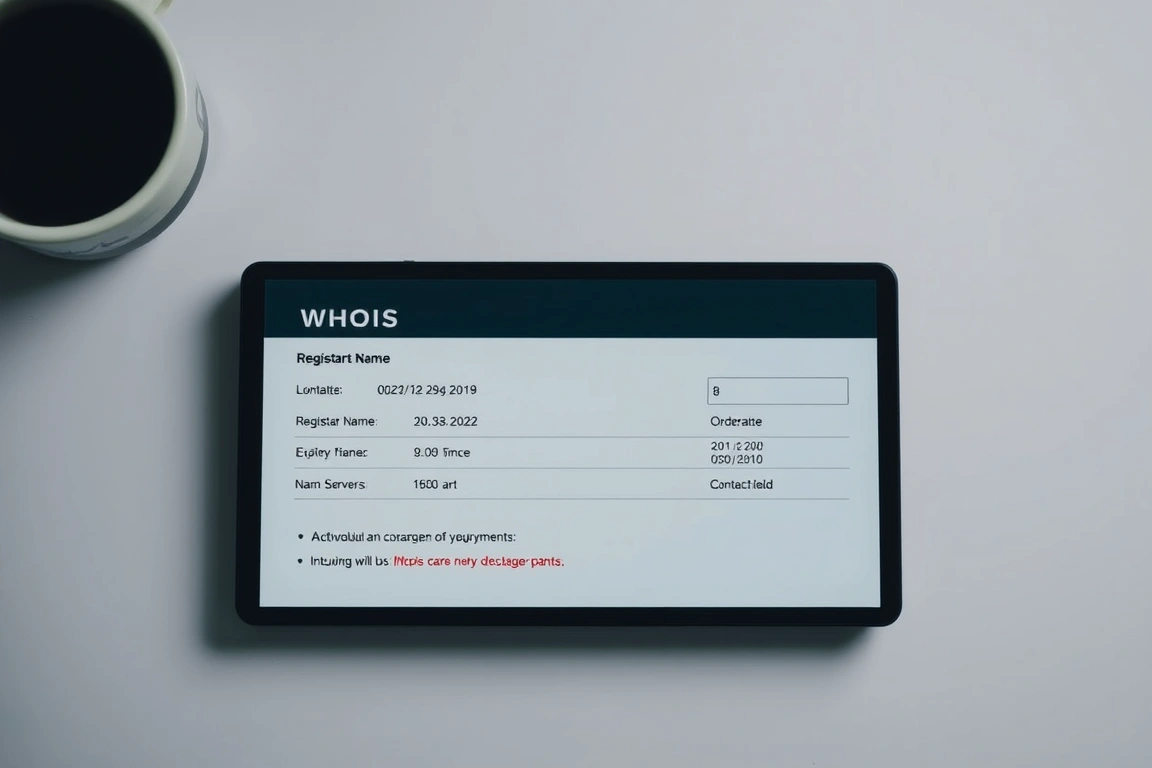
Checking whether a name is free to register and checking who currently owns it are two different questions, and they use two different tools even though most people run them as one search. Availability comes from a registrar's search box, which pings the registry directly and tells you yes or no. Ownership and record detail come from a WHOIS lookup, which queries a separate database of registration records.
The practical sequence:
- Type the exact name and extension into a registrar's search tool, such as Gandi's domain search, to see if it's offered for sale.
- If it shows as available, that's usually enough — move to registering it.
- If it shows as taken, or you want ownership detail rather than a yes/no, run a WHOIS lookup on the same name.
- Read what comes back: a full record, a partial one, or nothing at all mean different things, covered below.
A domain, as Wikipedia's overview of domain registration describes it, is reserved through an accredited registrar for a fixed term, not bought outright — which is why "available" really means "nobody currently holds an active registration for this term."
Search returns a WHOIS record
If a WHOIS lookup returns data, the name is registered — the question now is to whom, and the registrar field is where that starts. WHOIS records typically list the registrar of record, creation and expiry dates, name servers, and contact fields, though how much of that is populated varies by domain and by registry.
The registrar field doesn't tell you who owns the site's content or business — it tells you which accredited company holds the registration and can act on it (transfer, renew, release). Google Workspace's guidance on identifying a domain registrar frames this as the first step in any domain management task: before you can change name servers, renew a registration, or resolve a dispute, you need to know which registrar's dashboard actually controls the record. If you're trying to reach whoever manages a domain — to inquire about buying it, or to fix a technical issue — the registrar is your point of contact, not the WHOIS contact address, which is often unreachable.
WHOIS record shows blank or masked contact fields
A blank or redacted contact field almost always means a WHOIS privacy service or a registrar's own redaction policy, not that the domain is unregistered. Since data protection rules tightened public WHOIS disclosure in many jurisdictions, registrars commonly substitute anonymized contact details or forwarding addresses in place of the registrant's actual name, email, and phone number.
This is normal, not a red flag, and it doesn't mean the record is fake or incomplete in a way that matters for availability — the domain is still registered and still unavailable to you. What it does mean is that direct-contact fields are the wrong route if you want to reach the owner. Instead:
- Use the registrar-provided contact or forwarding form attached to the masked record, where offered.
- Contact the registrar identified in the record and ask about their forwarding process.
- Treat the registrant name/organization fields as unreliable for outreach even when partially visible, since some registries populate them with the registrar's own placeholder text rather than the domain holder's details.
None of this tells you how fresh the record is — WHOIS data reflects whatever was last submitted at registration or transfer, and there's no universal guarantee of how quickly changes propagate after an update, so treat any WHOIS record as a snapshot rather than a live status.
Desired name is taken
If the name is already registered, the expiry date in the WHOIS record is the next thing to check, because it tells you whether waiting is realistic. A domain that's mid-term with years left before renewal is a different situation from one expiring in a matter of weeks.
From there, the options split:
- Different extension — register the same name under another TLD now, through any standard registrar search such as Gandi's or Liquid Web's domain registration tool, rather than waiting.
- Watch and backorder — some registrars offer a backorder or watch service that attempts to catch the name if the current owner lets the registration lapse at expiry, though catching it isn't guaranteed since drop-catching services and other bidders may be trying for the same name.
- Contact the current owner — if the registrar field pointed you to a live company rather than a masked record, a direct inquiry about purchase is sometimes worth trying, particularly for a name that isn't actively being used.
None of these are fast fixes. An expiring registration can also simply renew on schedule, so "taken" today doesn't reliably become "available" on any predictable date unless you're monitoring the actual expiry.
Registrar
A registrar is the accredited company through which a domain is actually registered and which holds the live record on your behalf. Accreditation matters because it's what lets a company sell and manage registrations against a given registry's database in the first place, rather than reselling someone else's access informally.
Several registrars also bundle registration with hosting, email, or website builders, which is why the process rarely feels separate from "getting a website" for most buyers. Squarespace's instructions for registering a domain for an existing site are a case in point — registration there is folded directly into the site-setup flow rather than treated as a standalone purchase.
| Registrar | Positioning | Bundled with |
|---|---|---|
| Gandi | Offers registration across many domain endings | Hosting, email |
| Name.com | Registration-focused | Hosting, SSL |
| Liquid Web | Hosting-first | Managed hosting, servers |
| Squarespace | Site-builder-first | Site builder, hosting |
Whichever registrar holds a domain, that same company is the one you'd need to go through to transfer it elsewhere, change name servers, or renew it before expiry — which is why the registrar field in a WHOIS record matters more than it looks.
Domain registration
Registering a domain means reserving that name against a registry for a defined term — typically renewable annually — through an accredited registrar, rather than purchasing it as a permanent asset. Wikipedia's entry on domain registration describes this term-based structure as central to how the domain name system allocates names: the registrant holds usage rights for the term paid, and the registration lapses if it isn't renewed.
Pricing varies by extension, registrar, and whether the first term is discounted relative to renewal — checking a registrar's current listed price for the specific extension you want, such as through Gandi's domain search or Liquid Web's registration page, is more reliable than assuming a flat cost across extensions.
Buying a domain doesn't require forming a business entity. Individuals register domains under their own name routinely; an LLC or other entity is a separate legal and tax decision, unrelated to whether a registrar will process the registration.
Domain registration search
A domain registration search is simply the availability check run at a registrar — distinct from a WHOIS lookup, which returns ownership and record detail for names that are already taken. The registrar search answers "can I buy this," and it does so by checking the registry directly, in real time, rather than a cached or third-party database.
Country-code extensions complicate this more than generic ones. Some ccTLD registries publish limited or no public WHOIS data at all, which means a registrar's availability check may be the only reliable signal you get for those extensions — a WHOIS lookup can return next to nothing even for a domain that's actively registered, simply because the registry doesn't disclose it publicly. If a ccTLD search returns a blank WHOIS record, that blankness is a policy choice by the registry, not evidence the name is free.
Run the registrar's availability check first for any extension you're considering, and treat a WHOIS lookup as a second-stage tool for names that come back taken.